The Real Cost of Wireless Security in NZ: Why Your 'Bargain' System Could Be Costing You More
The Real Cost of Wireless Security in NZ: Why Your "Bargain" System is Probably Costing You More
You’ve seen the ads. Affordable wireless security kits at the local hardware store, promising peace of mind for a few hundred dollars. It seems like a no-brainer.
But here’s the truth most Kiwis discover too late: the real price of a security system isn’t on the box. It’s in the monthly bills that never stop.
Let’s cut through the hype. The best system isn’t the one with the flashiest app or the cheapest sticker price. It’s the one that actually protects your home for years, without locking you into a subscription or failing when you need it most.
The Subscription Trap: NZ’s Hidden Security Tax
Walk into any electronics store and you’ll see them: sleek boxes from brands like Ring and Google Nest. The price seems reasonable. What they don’t show you is the mandatory monthly fee to actually make the system work properly.
Think of it like buying a car but paying extra every month to use the brakes.
This changes everything. When you calculate what you’ll actually spend over 5 years, the “affordable” choice often becomes the most expensive.
The 5-Year Reality Check: Where Your Money Really Goes
Let’s look at the actual numbers. This isn’t speculation—it’s based on what Kiwis are really paying.
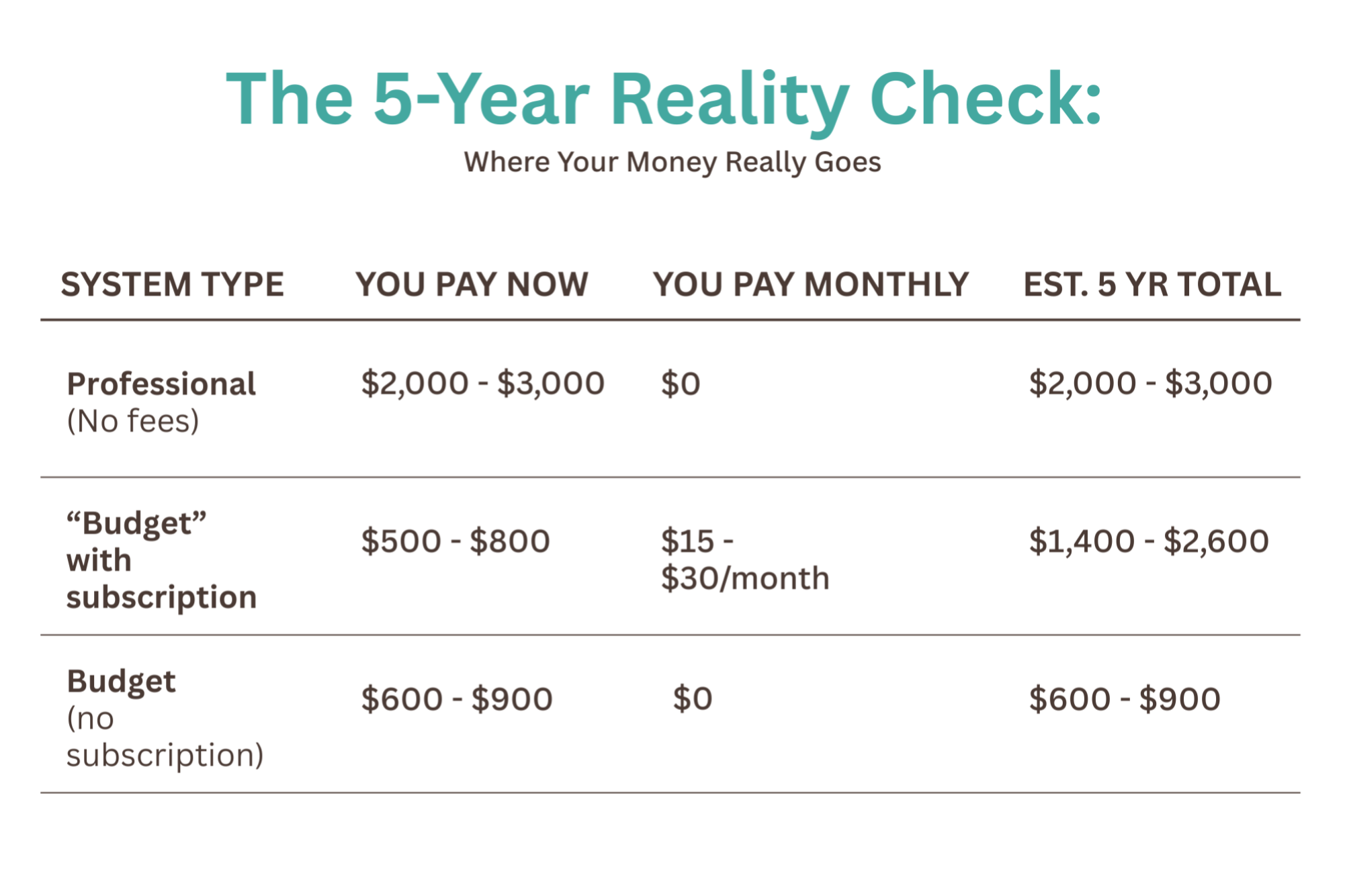
See the problem? Within 2-3 years, that “budget” subscription system has cost you as much as a professional one. And you’re still paying.
The Three Paths: Which One Fits Your Home?
1. The Professional Path: AJAX Systems
For: Homeowners who want to buy once and be done.
- No monthly fees – ever
- Local NZ installers who understand our houses and weather
- Built for our conditions – handles coastal air, rural outages, Wellington wind
- Actually modular – add what you need, when you need it
The truth: Yes, it costs more upfront. But by Year 3, you’ve likely saved money versus subscription systems. And you get gear that doesn’t quit during a storm.
2. The Simple Start: Ring & Mainstream Brands
For: Renters or those who might move soon.
- Super simple DIY setup
- Good basic protection
- Widely available
The catch: You’re subscribing to your security. Stop paying, and key features vanish. It’s designed to be upgraded every few years, and you’re locked into one brand’s ecosystem. Over five years, you’ll likely pay more than a professional system costs upfront.
3. The Smart, Self-Reliant Choice: Eufy & True No-Fee Systems
For: Absolute lowest upfront cost.
- Actually no subscriptions
- Decent cameras for the price
The catch: You become the system manager. Battery life and Wi-Fi stability are your responsibility, professional monitoring is hard to find, and expanding beyond basic cameras often means starting over from scratch.
Why More Kiwis Are Investing in Professional-Grade Security
The shift toward professional-grade systems isn't about being "smart" versus "not smart"—it's about recognizing that how you pay for security matters just as much as what you pay.
Here's what homeowners are realizing:
It's About Long-Term Mathematics
Kiwi homeowners are doing the math and discovering something counterintuitive: sometimes, spending more upfront actually costs less over time.
When you add up 5+ years of subscription fees, battery replacements, and potential upgrades for a consumer system, that "affordable" starter kit often ends up costing the same—or more—than a professional system with no ongoing fees.
It's About Peace of Mind, Not Just Alerts
There's a difference between getting a notification and getting a notification you can trust. Professional systems aren't just about preventing break-ins—they're about preventing stress.
- Fewer false alarms that wake you at 2 AM
- No surprise subscription increases next year
- No wondering if it will work during a storm or power outage
It's security that works in the background so you don't have to think about it.
It's About Supporting Local Experts
Professional systems come with something consumer brands can't match: local installers who understand NZ homes.
These aren't faceless call centers overseas—they're Kiwi businesses who:
- Know how coastal salt air affects electronics
- Understand rural internet limitations
- Can actually come to your home if something needs attention
It's About Future-Proofing
Your security needs will change. Maybe you'll add a sleepout, install a gate, or want smarter automation. Professional systems are built to expand seamlessly—you're not locked into replacing everything when your needs grow.
The Simple Truth
Choosing professional-grade security isn't about having more money to spend—it's about spending money differently.
It's the difference between:
- Renting security monthly (with prices that can change)
- Owning security outright (with costs you control)
For homeowners planning to stay put for years, it's becoming clear: one solid investment often costs less—and causes fewer headaches—than years of smaller payments.
Ultimately, the best system is the one that fits your timeline and budget. If you're settling in for the long haul, the numbers show that professional systems offer superior value and reliability over time. For shorter-term needs, a consumer system can be a perfectly valid stepping stone.
- The Team at MestyaTech